Service
Hedge Cutting in Doncaster
Trimming, reducing and reshaping hedges, from neat privet borders to towering conifer screens.
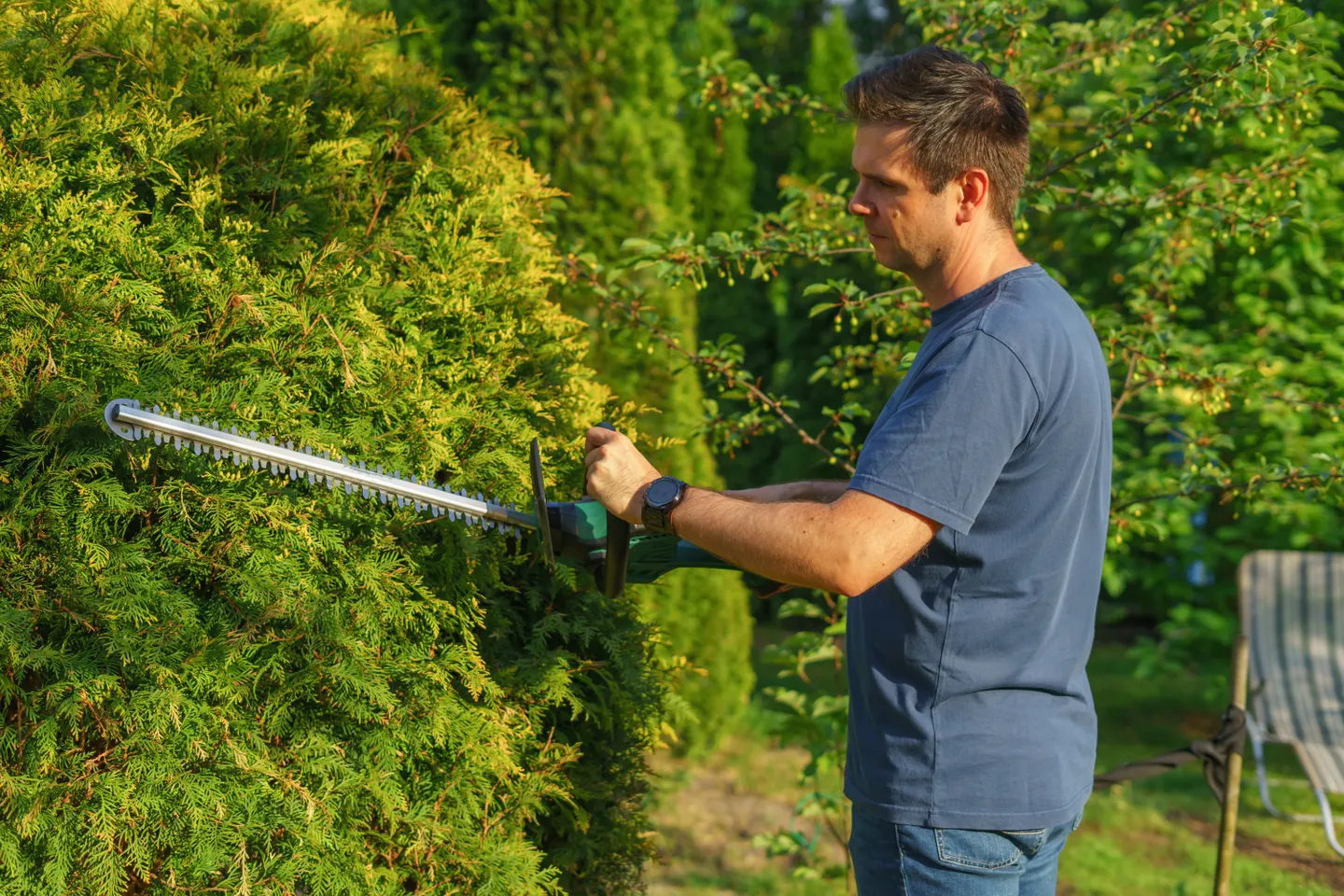
Hedges creep. A screen that was perfect five years ago can be blocking light, swallowing the path and annoying the neighbours. We trim, reduce and reshape so it goes back to doing its job.
Signs it might be time
- Hedge taller than you can safely reach
- Overgrowing the pavement or drive
- Patchy, leggy or out of shape
- Conifers that have run away
How we approach it
- 1
Agree height and line
We confirm how tall and how wide you want it before we start.
- 2
Cut and shape
Faces and tops are cut to a clean line, using access equipment for taller hedges.
- 3
Clear the clippings
Clippings are gathered from beds, lawns and paths.
Worth knowing
Hedges are common nesting sites. Active nests are protected all year, so we check before cutting; the main nesting season runs roughly March to August.
Common questions
How often should a hedge be cut?
Most formal hedges look best with one or two trims a year. Fast growers may need more.
Can conifers be cut back hard?
Many conifers will not regrow from old brown wood, so reductions need care. We will explain what is realistic.
Hedge Cutting near you
Areas where hedge cutting is a particularly common request. We cover all 36 areas.
- Hedge Cutting in Armthorpe
- Hedge Cutting in Bentley
- Hedge Cutting in Sprotbrough
- Hedge Cutting in Tickhill
- Hedge Cutting in Bawtry
- Hedge Cutting in Rossington
- Hedge Cutting in Cantley
- Hedge Cutting in Edenthorpe
- Hedge Cutting in Kirk Sandall
- Hedge Cutting in Barnby Dun
- Hedge Cutting in Hatfield
- Hedge Cutting in Thorne
- Hedge Cutting in Moorends
- Hedge Cutting in Dunscroft
- Hedge Cutting in Dunsville
- Hedge Cutting in Finningley
- Hedge Cutting in Auckley
- Hedge Cutting in Branton
- Hedge Cutting in Blaxton
- Hedge Cutting in Wadworth
- Hedge Cutting in Loversall
- Hedge Cutting in Warmsworth
- Hedge Cutting in Denaby Main
- Hedge Cutting in Adwick le Street
- Hedge Cutting in Woodlands
- Hedge Cutting in Carcroft
- Hedge Cutting in Skellow
- Hedge Cutting in Campsall
- Hedge Cutting in Askern
- Hedge Cutting in Norton
- All areas
Ask about hedge cutting
A phone call is usually the quickest way to arrange a visit and a quote. If we miss you, leave a message and we will ring back.